

Copper sputtering target, also called copper target, is a proven supper pure metal capable of depositing thin films from a wide variety of materials on to diverse substrate shapes and sizes, and it has excellent electrical and thermal conductivity due to its extreme copper purity over 99.99% with less than 5PPM of Oxygen. It plays an important role in cutting-edge fields such as electronics, communications, superconductivity, and aerospace, and it can stably release atoms under the bombardment of high-energy particles, which is crucial for the manufacture of uniform and high-quality thin films. Copper targets are classified into planar copper targets and rotary copper targets, and planar copper targets are normally oxygen free copper plates with circular, square or rectangular shapes.
Description
Copper sputtering target is used for a variety of thin film applications including as a conductor material in logic and memory devices. Fabmann can supply premium copper target materials in different parity such as 4N (99.99%), 4N5 (99.995%) and 5N (99.999%) for OEM PVD (Physical vapor deposition) systems, and we focus a lot on advanced thermomechanical processing (ATMP) to ensure better quality of crystallographic texture and grain size for ultra-high performance with minimum cost. We can supply both rotatory and planar copper sputter target materials with grain size smaller than 80μm and oxygen content less than 5ppm.
Production Process
It takes very long processes to make copper sputtering target from copper ore, and it normally involves several stages, including mining, beneficiation, smelting, refining, and the target production process itself, below is a brief introduction.
√ Mining, copper ore is extracted from the earth, and it exists in various forms, such as chalcopyrite (CuFeS₂), bornite (Cu₅FeS₄), and chalcocite (Cu₂S). Depending on the location and depth of the ore, either open-pit mining or underground mining methods may be used.
√ Beneficiation, crushing and grinding, the ore is crushed and ground to a fine particle size to liberate the copper minerals from the surrounding rock.
√ Flotation, the processed copper ore is mixed with water and chemicals to create a slurry, which is then subjected to a flotation process. This separates the copper minerals from the waste rock, producing copper concentrates.
√ Smelting, the copper concentrates are smelted in a furnace, typically a flash smelter or reverberatory furnace, to produce a matte, which is a mixture of copper sulfide and iron sulfide.
√ Conversion, the mixture of copper & iron sulfide is then converted to blister copper, which contains about 98% to 99% copper, by removing the remaining sulfur and iron.
√ Fire Refining, the blister copper is further refined in a fire refining process to remove impurities such as oxygen, sulfur, and other metals.
√ Electrolytic refining, the fire-refined copper is cast into anodes and subjected to electrolytic refining, and this process involves electroplating the copper onto cathodes, producing high-purity copper (99.99% or higher).
√ Melting, melt the high-purity copper in a vacuum induction furnace or other suitable high-temperature furnace to minimize contamination.
√ Casting, pour the molten copper into a mold to form a billet of the desired size and shape.
√ Hot Isostatic Pressing (HIP), this process is to densify the copper billet which to high pressure and temperature in an inert atmosphere to eliminate porosity and enhance density and uniformity.
√ Rough machining, shape the billet into a rough form of the target using lathes, milling machines, or other suitable tools.
√ Precision machining, further refining process is need to achieve the shape and size of the target to meet exact specifications.
√ Grinding and Polishing, grind and polish the surface of the target to achieve a smooth finish, which is critical for sputtering performance.
√ Cleaning, thorough cleaning of the target is vitally important as it can remove any contaminants or residues from the machining and polishing processes.
√ Quality control, this is one of the most important processes to for confirm whether the product is up to specification. It includes visual inspection, dimensional check, and surface roughness measurements. It also involves a set of tests such metallographic structure check, Oxygen/Hydrogen analysis, X-ray fluorescence (XRF), glow discharge mass spectrometry (GDMS), to verify the purity and composition of the target.
Product Range
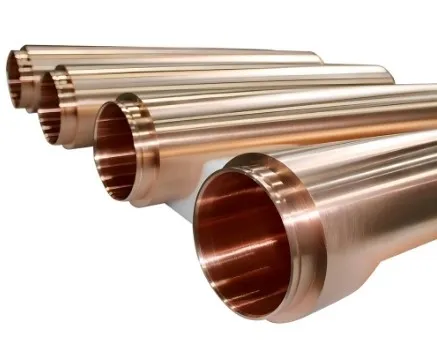
Rotary Sputtering Target
- √ OD from 2inch to7inch
- √ ID from 1.5inch to 6inch
- √ Length from 50inch to 130inch (1,270mm to 3,302mm)
- √ Customized rotary target
- √ Bonding service available
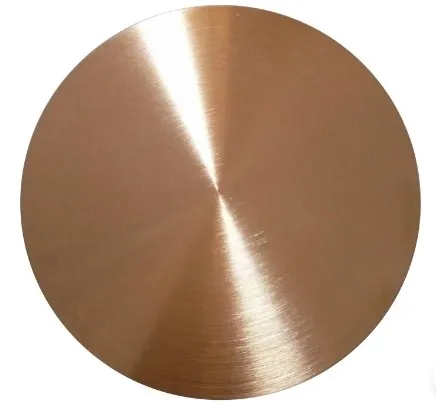
Planar Copper Target
- √ Customized dimension with max length to 3,000mm
- √ From 2” to 8'', Thickness: 0.125” & 0.250''
- √ 1”, thickness 0.125”
- √ Vacuum packing
Advantages of Rotary Sputtering Target
√ Improved uniformity, the rotation of the target helps achieve more uniform erosion and deposition across its surface. As the target rotates, different areas of the target are exposed to the ion bombardment, leading to more even erosion and deposition rates.
√ Improved target utilization, the erosion is spread out over a larger surface area, reducing localized damage and extending the target's lifespan. This also helps improve process efficiency and reduces downtime for target replacement.
√ Enhanced deposition rate, the rotational movement of the target can improve the ionization and sputtering efficiency, which lead to higher deposition rates while reducing the overall process time required to achieve the desired film thickness.
√ Improved film quality, the improved target utilization and uniformity can helps minimize defects, impurities, and stress within the deposited films, resulting in improved electrical, optical, and mechanical properties.
Fabmann specializes in supplying high purity copper sputtering targets with the highest possible density and smallest possible grain sizes for use in semiconductor, chemical vapor deposition (CVD) and physical vapor deposition (PVD) display and optical applications. We can also supply sputtering targets with monoblock or bonded with planar target with hole and threading, beveling, grooves and backing designed to work with both older sputtering devices as well as the latest process equipment, such as large area coating for solar energy or fuel cells and flip-chip applications. We can provide custom fabrication solution to for all shapes and configurations of targets compatible with all standard guns including circular, rectangular, annular, oval, rotary, and research sized dimensions. Besides, high purity copper sputtering targets, Fabmann also supply regular oxygen free copper plates with different grades like CW008A (C10200), CW009A (C10100), CW004A (C11000), CW0024A (C12200), and we can supply thin plates as well as thick plates with thickness upto 30mm.
-
![Rotary Copper Target]() Rotary Copper TargetRotary copper target, also known as a rotatable or cylindrical sputtering target, is used in certain types of sputtering systems, such as magnetron sputtering, to enhance the uniformity andread more
Rotary Copper TargetRotary copper target, also known as a rotatable or cylindrical sputtering target, is used in certain types of sputtering systems, such as magnetron sputtering, to enhance the uniformity andread more -
![Planar Copper Target]() Planar Copper TargetPlanar copper target is a flat, disc-shaped or rectangular sputtering targets used in physical vapor deposition (PVD) processes to deposit thin copper films onto substrates, and it can stably releaseread more
Planar Copper TargetPlanar copper target is a flat, disc-shaped or rectangular sputtering targets used in physical vapor deposition (PVD) processes to deposit thin copper films onto substrates, and it can stably releaseread more


We're well-known as one of the leading copper sputtering target manufacturers and suppliers in China. We warmly welcome you to buy high quality copper sputtering target at competitive price from our factory. Contact us for more details.
copper sputtering target for energy conversion, solar energy copper sputtering target, copper sputtering target price