

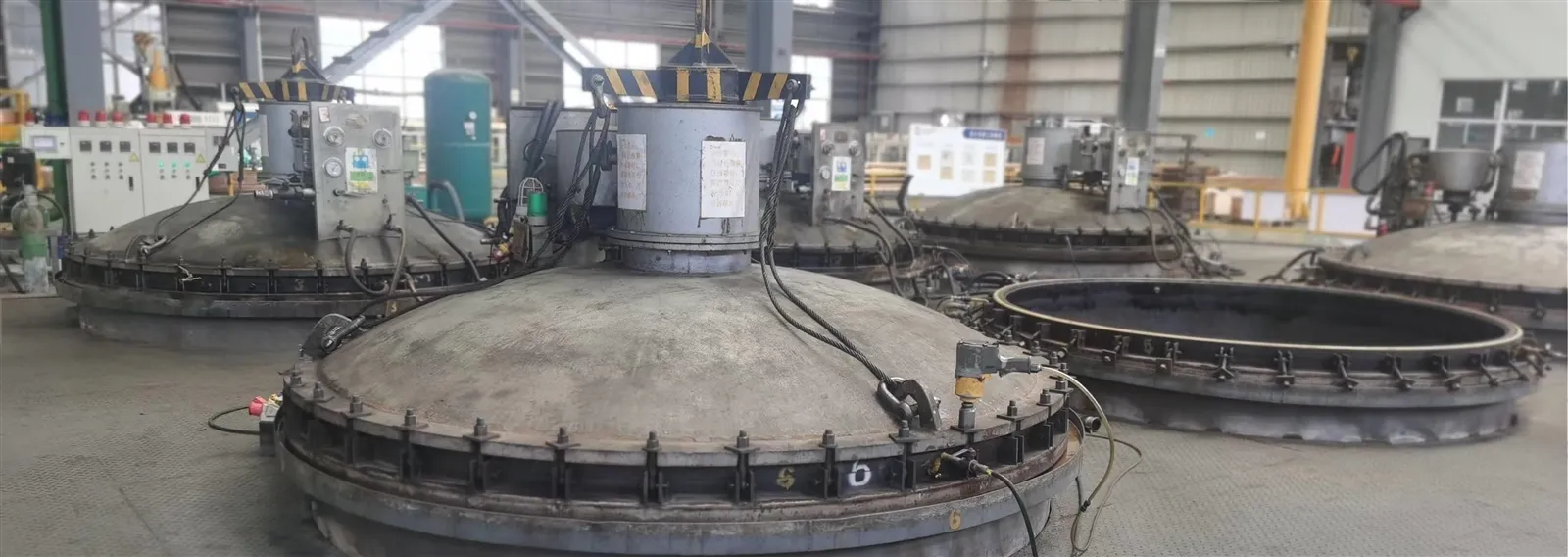
Annealing is a heat treatment process designed to soften and improve the ductility, electrical & thermal conductivity and machinability of copper or copper alloys while reducing their hardness and mechanical strength. This heat treatment process is designed to heat the metal above its crystallization temperature and hold there until all previous thermal history is removed and then cooled under controlled conditions. There are different annealing processes and solutions for different copper and copper alloys. Method of heating, furnace design, furnace atmosphere, and shape will affect uniformity of the annealing.
Description
Annealing can help copper alloys become more malleable and easier to work with, making them suitable for various applications, and many products need such heat treatment such as hollow conductors, copper sputtering target, copper profile, rotor bar etc. The annealing process can also relieve stresses within the material and improve its conductivity properties, and Fabmann pays extra attentions to temperature & atmosphere control, cooling control for optimal recrystallized microstructure.
Annealing Process
Annealing is designed to soften the cold worked metal by heating to a temperature that causes recrystallization, yet, heating well above the recrystallization temperature, it may cause grain growth. There are many factors which could affect the uniformity of annealing result such as work piece shape, furnace design, and furnace atmosphere. For copper and brass alloys, grain size is the standard means of evaluating annealing quality, but it's difficult to predict a specific combination of time and temperature that will always produce a given grain size in a given copper alloy. There are three stages of the annealing process classified by temperature increase: recovery, recrystallization, and grain growth.

√ Recovery, it happens when the lower temperature stage of annealing process, and it results in softening of the metal through removal of primarily linear defects called dislocations and the internal stresses. At this stage, the grain size and shape normally don't change.
√ Recrystallization, during this stage, where new strain-free grains nucleate and grow to replace those deformed by internal stresses.
√ Grain growth, it will occur after the recrystallization has finished, and annealing is to continue. During grain growth, the microstructure of the material starts to coarsen, and annealing would be required.
To make proper annealing, Fabmann focuses on five steps, and they are:
√ Preparation, the very first step is always to clean the surface of copper alloy material, and it is very important to remove surface contaminants such dust, stains and oxides.
√ Heating, the temperature at which annealing is conducted depends on the specific alloy, and for most copper alloys, annealing is typically done at temperatures between 600°C and 950°C.
√ Soak time, keep the alloy at the annealing temperature for a specific period, allowing the heat to penetrate the material evenly. The soak time can vary a lot depending upon the thickness and size of the copper and copper alloy material, and it is normally few hours for thick wall copper alloy tubing or profiles.
√ Cooling, after the required soak time, the copper alloy is slowly cooled down. The rate of cooling is essential in achieving the desired microstructure and properties, and a proper cooling rate is typically used to maximize stress release and to ensure a fine-grained microstructure.
√Verification, the copper material needs to be checked for the desired properties, including mechanical property, and conductivity.
Annealing Issues
There are many issues around annealing around copper and copper alloy products, and you can only achieve optimal annealing result if you can avoid following situation:
√ Overheating, it can cause excessive grain growth, which has negative impact upon the strength and electrical conductivity. Secondly, it can cause oxidation, which will lead to discoloration and potential embrittlement. Plus, it can cause warping and distortion of workpiece.
√ Underheating, this means that metal work piece might not have recrystallized the microstructure, resulting in residual stresses and potentially affecting the desired properties.
√ Inhomogeneous microstructure, inhomogeneous microstructure with variations in grain size and properties is often caused by uneven annealing temperature.
√ Improper atmosphere control, it can lead to the absorption of gases like hydrogen or oxygen, which can cause embrittlement issues. Embrittlement is totally forbidden in nuclear energy industry.
Further more, extra attention shall be paid following measurements:
√Protective atmosphere, maintaining a controlled and stable atmosphere typically furnace is filled up with inert gases like nitrogen or argon, prevents oxidation and gas absorption.
√ Proper furnace maintenance, regular maintaining and calibrating the annealing furnace ensures consistent heating and avoids temperature fluctuations.
√ Cleanliness, ensuring clean surfaces and handling practices minimizes contamination and surface damage.
√ Cooling rate, managing controlled cooling rate helps to prevent residual stresses and ensure proper microstructure development.
By addressing these potential issues and implementing proper control measures, Fabmann can help you to achieve sound annealing and obtain the desired properties for the desired applications.
Annealing Temperature
Copper annealing is usually performed in a furnace with protective gas or in a vacuum furnace to avoid oxidation. Generally speaking, two annealing tempers are popular, light anneal, which is performed at a temperature slightly above the recrystallization temperature, and soft anneal, which is performed several hundred degrees higher, at a temperature just below the point at which rapid grain growth begins. When annealing copper that contains oxygen, the hydrogen in the atmosphere must be kept to a minimum to avoid embrittlement. For Oxygen-free copper, it is extremely brazeable, and solderable. C10100 copper is normally soft annealed at temperature range between 370° to 650°.