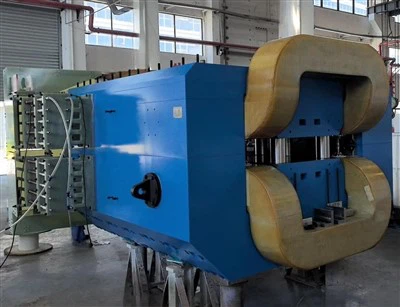
Custom rectangular waveguide is a structure that guides any particular type of wave such as sound waves, electromagnetic waves or radio waves with minimal loss of energy by restricting the transmission of energy to one direction. Usually, the broader dimension of the rectangular waveguide is represented by 'a' (x-direction) and the breadth is represented by 'b' (y-direction). Rectangular waveguides are versatile tools for guiding electromagnetic waves for microwave communication, industrial heating, research and development involving microwave signals and interactions, medical applications such as imaging and treatment technologies.

Rectangular Waveguide Design Consideration
When designing a rectangular waveguide, you need to consider following aspects:
- √ Dimensions (Width and Height), it directly affect the cutoff frequency for the various modes. The dominant TE mode (TE10) has the lowest cutoff frequency.
- √ Material selection, common materials include copper and aluminum, chosen for their high electrical conductivity to minimize losses.
- √ Dielectric coatings, If needed, dielectric materials can be used for specific applications, but they must be carefully selected to prevent excessive loss or mode conversion.
- √ Wall thickness, thick wall can provide sufficient strength and rigidity, especially for high-power applications where thermal and mechanical stresses are significant.
- √ Losses, thicker walls can reduce losses.
- √ Mode consideration, you need to consider TE, TM, or hybrid modes, and the dominant mode (TE10) is usually preferred, but higher modes can also be supported depending on the application.
- √ Mode suppression, design features such as tapering or specific cutouts can be implemented to suppress unwanted higher-order modes.
- √ Flanges and connectors, appropriate flanges for connecting to other waveguide components or antennas. Standardized flanges (like WR or UG) are commonly used.
- √ Waveguide couplers, if needed, design couplers (e.g., hybrid couplers, directional couplers) for efficient signal transfer between components.
- √ Surface finish and tolerances, a smooth internal surface reduces scattering losses, and silver plating is quite often required for copper waveguide tubing for the desired finish.
- √ Manufacturing tolerance, it is very important to keep tight tolerance for optimal performance across the operating frequency.
- √ Thermal management, heat dissipation, especially in high-power applications, and design for adequate ventilation or cooling is necessary.
- √ Environmental conditions, if the waveguide will be used in harsh environments, select materials and coatings that resist corrosion and moisture.
- √ Electromagnetic simulation, popular software tools (like HFSS, CST, or COMSOL) to simulate the waveguide's performance, including mode propagation, insertion and return losses, and bandwith.

Our Custom Fabrication Service
Fabmann is very experienced in providing custom fabrication services for rectangular waveguides involves a series of steps to ensure that the final product meets your specific requirements. Our focus has been devoted to the following aspects:
- √ Dimensions, materials, operating frequencies, and environmental considerations.
- √ Application, understanding of your intended application, such as telecommunications, radar, or research, which can influence design decisions.
- √ Offer design assistance to create tailored waveguide solutions, utilizing CAD software to draft precise specifications.
- √ Material selection
- √ Fabrication techniques, high quality extrusion or cold drawing is often needed for ensuring high quality waveguide tube production.
- √ Implement strict quality control measures throughout the fabrication process to ensure that all products meet specified tolerances and performance criteria.
- √ Prototyping, Fabmann can offer rapid prototyping services to allow clients to test initial designs before full-scale production. This can include 3D printing for initial models or quick-turn machining for functional prototypes.
- √ Feedback, Fabmann has a feedback process in place which for finalizing necessary adjustments before final production.
- √ Flexible production runs, Fabmann can handle small or large production runs based on your needs.
Fabmann can meet diversified needs while ensuring high-quality results because our team focuses on understanding your specifications, leveraging advanced design and fabrication techniques, and offering robust support throughout the process. If you need further guidance on specific aspects or have questions, feel free to ask!
Hot Tags: custom waveguide tube, China custom waveguide tube manufacturers, suppliers, factory, Custom Waveguide Tube, Rectangular Waveguide Tube, Slotted Waveguide Tube, waveguide, Waveguide Tube