

Copper is widely used because of its high electrical and thermal conductivity, good corrosion resistance, machinability, and strength. Whereas copper alloys contain amounts of different alloying elements such as aluminum, zinc, beryllium, chromium, zirconium, tin, silver, sulfur or iron, and these elements modify one or more of the basic properties of copper, such as strength, creep resistance, corrosion resistance, machinability or weldability. Copper alloys deliver an assortment of physical properties that allow them to be used for certain demanding applications.
Description
Fabmann focuses on supplying customized copper and copper alloy products in different forms like wire, sheet, coil, plate, rods, tubing and profiles, and we are dedicated in developing copper products for medical, power supply, green energy, EV as well as scientific research. Each of our delivery has gone through strict production control and test process to meet desired specification in terms of copper purity, electrical and thermal conductivity as well as mechanical property. Our product range is following:


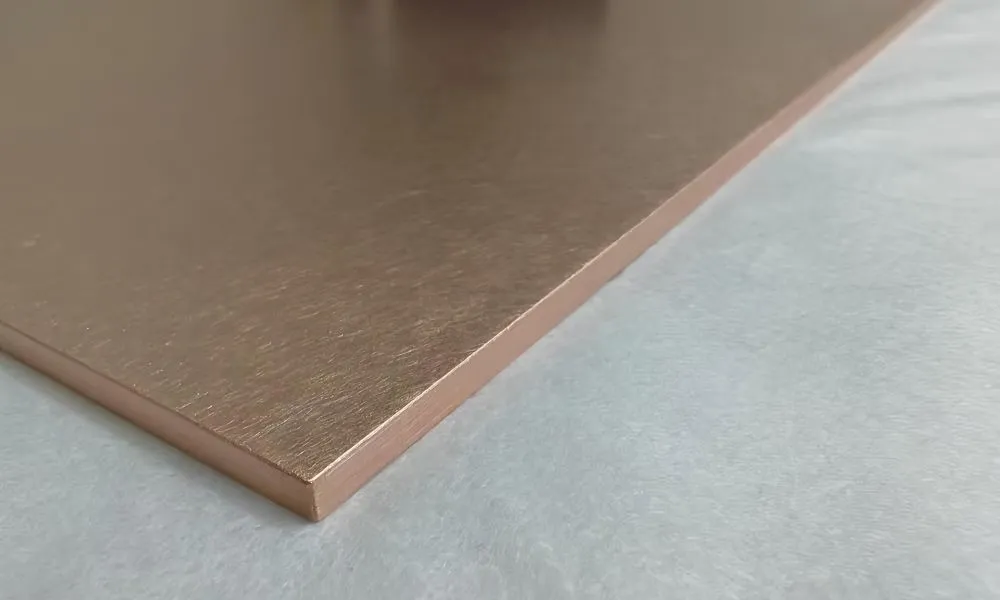


Difference Between Copper and Copper Alloy
Copper is famous for its excellent electrical conductivity, thermal conductivity, and corrosion resistance. But, it is a relatively low strength metal which limits its application in many applications, and due to this reason, copper alloys are developed to overcome the limits of corrosion resistance and strength. Below is a general summary of the main differences between these two kinds of metals.
√ Composition
Pure copper consists primarily of copper with max impurities <0.1%, while copper alloys contain major elements such as zinc, tin, aluminum, silver, nickel, chromium, silicon and many other elements, and the main purpose is either to strengthen the copper strength or improves its corrosion resistance performance. Copper alloys exhibit a wide range of properties and characteristics due to the incorporation of alloying elements, and these elements are added to copper to tailor its properties to meet specific requirements for various applications.
√ Properties
Pure copper is relatively soft with low tensile & yield strength, whereas copper alloys, on the other hand, exhibit significantly higher strength due to the presence of alloying elements that hinder dislocation movement and enhance the material's resistance to deformation.
- √ Electrical conductivity, pure copper possesses excellent electrical conductivity while copper alloy generally has lower electrical
- conductivity, but the extent of reduction depending on the type and amount of alloying elements.
- √ Corrosion Resistance, pure copper exhibits good corrosion resistance, however, alloying can enhance or diminish corrosion resistance
- depending on the specific alloying elements and their interactions.
- √ Formability, pure copper is highly ductile and easy formable, making it suitable for applications requiring shaping or bending while alloying
- elements might have negative impact upon formability, depending on the alloying elements and their influence on the material's
- microstructure.
- √ Cost, pure copper is generally more expensive than brass and bronze, and they are often less expensive than other copper alloys.

How to improve copper and copper alloy mechanical property?
Copper in general is a versatile and widely used metal with excellent electrical conductivity, thermal conductivity, and corrosion resistance. There are several solutions which can be adopted to enhance the strength of copper to stand higher loads and perform better in demanding environments. The fundamental reason is to alter its microstructure and introduce deformation within the crystal lattice. These solutions can change the movement of dislocations for plastic deformation, and copper alloy becomes stronger and more resistant to deformation due to the change of dislocation character. The strengthening solutions are often used by different manufacturers:
√ Cold work, this technique involves plastically deforming the copper at room temperature through processes like cold rolling, drawing, bending or hammering. This cold work introduces dislocations and increases the density of defects within the crystal structure, and therefore, it can make the material harder for dislocations to move and thus strengthening the material. Meanwhile, you shall be minded that the excessive cold working can cause embrittlement which is a primary defect for high purity copper products used for demanding industrial applications.
√ Alloying, adding other elements such as zinc, tin, or aluminum, can create solid solutions or intermetallic compounds that strengthen the copper material because this process can distort the crystal lattice and impede dislocation movement, which can improve the strength. For example, brass (copper-zinc alloy) and bronze (copper-tin alloy) are significantly stronger than pure copper.
√ Precipitation hardening, this heat treatment solution is to heat copper alloys to precipitate a second phase within their microstructures, and this process can act as obstacles to dislocation movement, effectively strengthening the material. Some alloying elements exhibit higher solubility in solid copper while it’s hot than cold. This means they can be dissolved by solution treatment also called solution annealing at high temperatures, around 950–1000°C, and then removed from solution by a precipitation treatment at a lower temperature, commonly around 650°C. This practice produces a fine precipitate throughout the metal that strengthens the matrix without spoiling the conductivity. In fact, conductivity improves as precipitates drop out of solution. Beryllium, chromium and zirconium are common examples of this type of addition. Combinations of nickel with silicon or phosphorus are also useful.
√ Solid-solution hardening, it means alloying elements that remain dissolved in solidified copper, and it can strengthen the lattice structure.
√ Grain refinement, most manufacturers use solutions to reduce the average grain size in the copper microstructure for enhancing its strength by recrystallization annealing or severe plastic deformation. The fact is that smaller grains offer more grain boundaries, and these boundaries can act as barriers to dislocation movement.
√ Strain hardening, it’s usually achieved by cold work such as rolling or drawing, and this process can harden copper and copper alloys. As a result, strength, hardness and springiness increase but ductility decreases. Plus, this also have an impact upon conductivity, and it will be reduced to a small extent. The effect of cold work can be removed by annealing, in which case full conductivity returns. Strain hardening is often used with pure copper for strengthening its mechanical property.
√ Dispersion, this technique is often used in high-performance copper alloys for demanding applications, and it’s achieved by adding fine, inert particles to the copper matrix for improving its strength because these particles hinder dislocation movement.

The choice of strengthening technique depends on various factors, including the desired level of strength, the required formability, the cost considerations, and the intended application. For instance, cold working is suitable for applications requiring moderate strength and good formability for pure copper, while precipitation hardening is preferred for high-strength applications where formability is less critical. Whether you need increased strength, improved wear resistance, or enhanced electrical conductivity, there is a suitable strengthening method available to enhance the performance of this versatile metal. Fabmann has a group of specialists in this copper and copper alloy field, and we can supply you the desired metal type.
What are the popular copper alloy types?
Copper alloys contain small amounts of various alloying elements such as beryllium, chromium, zirconium, tin, silver, sulfur, zinc, silicon or iron, and these elements modify the basic properties of copper, such as strength, creep resistance, machinability, conductivity, mechanical strength and weldability. Most of the applications are similar to coppers, while the conditions of application are more specifically designed. Below is the popular grades:
√ Brass is copper zinc alloy containing up to appx. 45% zinc and a small additions of lead for machinability, and a small additions of tin for strength. Copper zinc alloy is single phase up to about 37% zinc in the wrought condition, and this type of alloy shows excellent ductility, and therefore is often used in the cold worked condition for better strength. Copper zinc alloys with more than 37% zinc, often 37-45% Zinc, also called beta or duplex alloys, have even higher strength, but limited ductility at room temperature compared to the single phase alloys. In most cases, the dual phase brasses are usually cast or hot worked due to their chemical composition. Bass has a wide family as below:

- 1. Copper-Zinc alloys
- 2. Copper-Zinc-Lead alloys (Leaded brasses)
- 3. Copper-Zinc-Tin alloys (Tin brasses)
- 4. Copper-Tin-Zinc alloys (red, semi-red and yellow brasses)
- 5. Manganese bronze alloys (high strength yellow brasses)
- 6. Leader manganese bronze alloys (leaded high strength yellow brasses)
- 7. Copper-Zinc-Silicon alloys (Silicon brasses and bronzes)
- 8. Copper-Bismuth and Copper-Bismuth-Selenium alloys
√ Bronzes are alloys of copper with tin, and other elements such as phosphorus, aluminum, silicon, manganese and nickel. These alloys can achieve high strengths, combined with good corrosion resistance, and they are often used for springs and fixtures, metal forming dies, bearings, bushes, terminals, contacts and connectors, architectural fittings. The main alloys of industrial bronze family has following family members:
- 1. Tin bronze, containing up to 11% tin and 89% copper, it has good strength and hardness, making them perfect for use in bushes, gears
- and bearings.
- 2. Bearing bronze, also called lead bronze, it has around 7% of lead, is often used for its high wear resistance, high strength and
- machinability.
- 3. Aluminum bronze, it normally contains up to 14% aluminum and 4% Fe, and the remaining element is copper.
- Aluminum bronze shows excellent corrosion resistance and strength, and it can exceed the strength of carbon steel by a significant
- margin, whilst still retaining the other benefits of bronze such as corrosion-resistance. That’s why it is popularly used for bearings and
- bushes, but also shafts and gears in high-stress applications, and alloys such as C95900 can be used to make long-lasting marine
- components.
- 4. Phosphor bronze, it contains a little phosphorus appx. 0.2% and up to 10% of tin, and it’s a hard-wearing and friction-resistant alloy. It is
- widely used for industrial bushes and pins, to reduce friction on moving components in both radial and linear applications. It is also use
- for springs and fasteners, its low friction nature and strength allowing efficiency in small or complex mechanisms.
- 5. Nickel-Aluminum Bronze, it has around 4% nickel, 9% aluminum, and little iron to achieve a high strength and high ductility alloy. This
- alloy is widely used as oil and gas pump components such as bushes, bearings and shafts.
- 6. Bismuth Bronze, it is often used as an alternative to leaded bronze without toxicity, and that’s why bismuth bronze grade like C89835 is
- an ideal alloy for plumbing applications.
- 7. Manganese Bronze, this alloy contains high levels of manganese, zinc, aluminum and iron, and it can achieve very good wear resistance
- and strength. Due to this excellent property-formidable strength, it is widely used in aerospace and associated industries, offering wear
- resistance, strength and corrosion resistance in one package.
- 8. Copper Nickel Bronze, this alloy family has 2 to 30% nickel, and one common characteristic is that this family alloys all exhibit high
- corrosion resistance even in saltwater environments. Therefore, they are often used in sea or marine environments, including fasteners,
- bearing cages and shafts that are used on sea-going vessels.
- 9. Silicon Bronze, silicon is added to this alloy for to casting and welding performance, and it normally has 3-5% silicon, 1% of iron.

√ CuNi2SiCr, C18000, is a low-contained copper alloy and is thermally aged, and it is a heat treatable copper base alloy and its excellent properties are obtained largely through heat treatment. Its properties combine high hardness, strength and wear resistance with relatively high electrical and thermal conductivity.
√ Chromium copper alloy (C18200) with 0.6-12% of chromium, it is often heat treated and cold worked to provide electrical conductivity of 80% IACS and hardness. It is often used in applications that require deformation resistance at high temperatures.
√ Copper beryllium alloys, this family has shown characters such as high strength, good thermal & electrical conductivities. There are two sub-families:
- 1. The high conductivity alloys have 0.2-0.7% of beryllium and high cobalt and nickel contents.
- 2. The wrought high strength alloys consist of 1.6 to 2.0% of beryllium and nearly 0.3% of cobalt and the cast high-strength alloys contain
- up to 2.7% of beryllium.
The wrought alloys from C17200 to C17400, and the cast alloys are designated as C82000 to C82800. C17200 alloys have high tensile strength of over 1380 MPa. Copper beryllium alloys can be precipitation hardened or age hardened to achieve high strength. The cast alloys contain dendritic structure of alpha copper and beryllide phases. The wrought alloys have microstructure containing twinned grains of alpha copper with cobalt, nickel or cobalt and nickel beryllide particles dispersed in the structure.
√ Copper Zirconium alloys are precipitation hardening alloys for high temperature applications where material need to have a combination of high electrical and thermal conductivity as well as mechanical properties, and the excellent properties are obtained through thermomechanical treatment which typically consists of solution annealing followed by rapid quenching to water bath, cold working, aging at 400-450°C and cold working to final dimensions. The final metallographical structure of zirconium copper consists of finely dispersed Cu5Zr precipitates which develop during the aging treatment which is essential to achieve high resistance against softening at elevated temperature and high electrical conductivity. This family has following alloy grades:
- 1. C15000 (CuZr /CW120C), it contains approximately 0.10-0.20% of zirconium, this alloy has a good balance of strength, conductivity, and
- corrosion resistance. It is commonly used for electrical contacts, bus bars, and heat exchangers.
- 2. C18150 (CuCrZr/CW106C), a copper chromium zirconium alloy, offers a combination of strength, conductivity, wear and oxidation
- resistance. It can withstand service temperatures up to 500°C and is commonly used in various automotive and space applications such
- as electrical and electronic components, space rocket engine and nozzle components.

Copper alloys are created by blending copper with other elements, and these alloying elements play a crucial role in improving copper’s properties through various strengthening mechanisms. Some of the key strengthening mechanisms in copper alloys include solid solution strengthening, precipitation hardening, and grain refinement. In short, most wrought alloys are available in various cold worked conditions, which have room temperature strengths and fatigue resistances. Typical applications of cold worked conditions also called cold worked tempers include springs, fasteners, hardware, small gears, and cams. Most notably plumbing fittings and valves are produced by hot forging process. Fabmann has solid experience in working with different copper alloys for different applications, and our dedicated team can assist you on copper alloy selection as well as manufacturing solution.
Joining Techniques For Copper Alloys
The most adopted joining techniques for copper alloys are welding, casting and vacuum brazing, each is designed for different applications and requirements.
√ Welding is a common method for joining copper alloys, allowing for the fusion of two or more pieces of metal to form a strong and continuous joint. Gas metal arc welding (GMAW) and gas tungsten arc welding (GTAW) are commonly used for copper alloys, providing precise control over the heat input and minimizing the risk of distortion. The high thermal conductivity of copper alloys can present challenges during welding, but proper techniques, such as preheating and post-weld heat treatment, can help control the heat-affected zone and ensure a successful weld.
√ Casting is another important fabrication and join technique for copper alloys, particularly for complex and intricate shapes that cannot be easily produced through other methods. Investment casting, also known as lost-wax casting, is frequently used for copper alloys, providing excellent surface finish and dimensional accuracy. This technique involves creating a wax pattern, which is then encased in a ceramic shell. The wax is melted away, and the cavity is filled with molten copper alloy, resulting in a highly detailed and precise cast part.

√ Vacuum brazing, such as hydrogen shielded vacuum brazing, induction vacuum brazing, furnace vacuum brazing etc, and hydrogen shielded vacuum brazing is a very common method for joining materials like copper and stainless steel to make assemblies destined for high vacuum applications or UHV applications (Ultra-High Vacuum). Hydrogen vacuum brazing is designed to use hydrogen as a heating medium or shielding gas which is transported from a gas tank to a heating device for heating and combustion, generating a high-temperature flame for heating the workpiece. This heating method can achieve fast, efficient, and uniform heating, softening and melting the workpiece, and providing the necessary conditions for brazing. Meanwhile, the high permeability of hydrogen is used to quickly transfer to the brazing joint, protecting the brazing material from oxidation or contamination during the melting process, and ensuring the quality of the welded joint.
Both welding and casting techniques offer advantages and challenges in working with copper alloys. Welding allows for the joining of components and repairs, while casting enables the creation of intricate and complex shapes. By selecting the appropriate technique and applying proper procedures, manufacturers and fabricators can harness the unique properties of copper alloys for a wide range of applications across industries, including aerospace, marine, and electronics.

Our Oxygen Free Copper Range (oFE and oFHC)
Fabmann supplies top notch oxygen free copper which meets the requirement of C10100 (CW009A) with oxygen < 5PPM & Hydrogen<0.5PPM, and our product covers following types:
√ Plates (Residual Resistivity Ratio, RRR >250), 100* 200, 200* 300, 300*500, 500*1500, 1200*1500 with different thickness range:
5,8,10,15, 25, 35mm
√ Tubing (Residual Resistivity Ratio, RRR >350), Φ55-61 x 3,000mm, Φ84-112 x 3,00mm, Φ193-253 x 890mm, Φ247-281 x 900mm,
Φ229-304 x 700mm
√ Round bar, Φ16, Φ22, Φ48, Φ65, Φ112, Φ120, Φ130, Φ170
√ Round rod, (Residual Resistivity Ratio, RRR >350), coil upto 4,000kg, wire diameter range: Φ2.6, Φ3, Φ8, Φ12.5, Φ25.
√ Busbar, thickness 10-25m, width upto 250mm, max length 5,500mm
√ Foil, thickness 0.15-3.0, width<350mm, single coil max weight 240kg
√ Wire, Φ0.025, Φ0.07, Φ0.08, Φ0.1
-
![Copper Profile]() Copper ProfileCopper profiles, often called as copper section, copper tubing, copper bars, can be extruded, cold rolled or cold drawn sections of copper and copper alloys which are designed to have specific shapesread more
Copper ProfileCopper profiles, often called as copper section, copper tubing, copper bars, can be extruded, cold rolled or cold drawn sections of copper and copper alloys which are designed to have specific shapesread more -
![Custom Copper Tubing]() Custom Copper TubingFabmann’s copper and copper alloy tubing is highly customized for your specific project requirement, and the copper materials are oxygen free copper, phosphor deoxidized copper,read more
Custom Copper TubingFabmann’s copper and copper alloy tubing is highly customized for your specific project requirement, and the copper materials are oxygen free copper, phosphor deoxidized copper,read more -
![Custom Copper Bar]() Custom Copper BarFabmann supplies custom copper bar for electrical appliances, switch contacts, power distribution equipment, bus ducts, and specific electrical engineering projects, and we also provide differentread more
Custom Copper BarFabmann supplies custom copper bar for electrical appliances, switch contacts, power distribution equipment, bus ducts, and specific electrical engineering projects, and we also provide differentread more -
![Custom Copper Conductor]() Custom Copper ConductorCustom copper conductors have various conductor types such as flat copper wire, stranded copper conductor, solid copper conductor bar and hollow copper conductor which is also called hollow magnetread more
Custom Copper ConductorCustom copper conductors have various conductor types such as flat copper wire, stranded copper conductor, solid copper conductor bar and hollow copper conductor which is also called hollow magnetread more -
![Oxygen Free Copper]() Oxygen Free CopperTo produce high quality oxygen free copper (OFC), the copper is processed with carbon to minimize oxygen presence, and the two primary grades are C10200 (CW008A) and C10100 (CW009A). CW009A has anread more
Oxygen Free CopperTo produce high quality oxygen free copper (OFC), the copper is processed with carbon to minimize oxygen presence, and the two primary grades are C10200 (CW008A) and C10100 (CW009A). CW009A has anread more -
![Copper Sheet]() Copper SheetCopper sheet is a general term, and it includes copper alloy sheet as well, and it has good malleability, high electrical and thermal conductivity. Fabmann supplies high quality custom copper andread more
Copper SheetCopper sheet is a general term, and it includes copper alloy sheet as well, and it has good malleability, high electrical and thermal conductivity. Fabmann supplies high quality custom copper andread more -
![Copper Plate]() Copper PlateFabmann offers copper and copper alloy plates which mainly includes C10100 (CW009A), C10200 (CW008A), C11000 (CW004A), and many other copper alloys such as C17200, C17510, C18150, and C18200. Ourread more
Copper PlateFabmann offers copper and copper alloy plates which mainly includes C10100 (CW009A), C10200 (CW008A), C11000 (CW004A), and many other copper alloys such as C17200, C17510, C18150, and C18200. Ourread more -
![Copper Busbar]() Copper BusbarCopper busbar is designed used for high-current applications due to its excellent electrical conductivity, and it’s mainly used for switchgear and control panels, busway enclosures and larger panelread more
Copper BusbarCopper busbar is designed used for high-current applications due to its excellent electrical conductivity, and it’s mainly used for switchgear and control panels, busway enclosures and larger panelread more -
![Copper Fabrication]() Copper FabricationFabmann provides custom solution for your copper and copper alloy related products which are primarily used in power generation, automotive, power transmission, electrical, induction furnace andread more
Copper FabricationFabmann provides custom solution for your copper and copper alloy related products which are primarily used in power generation, automotive, power transmission, electrical, induction furnace andread more -
![Copper Tube]() Copper TubeFabmann’s copper and copper alloy tubing is highly customized for your specific project requirement, and the copper materials are oxygen free copper, phosphor deoxidized copper,read more
Copper TubeFabmann’s copper and copper alloy tubing is highly customized for your specific project requirement, and the copper materials are oxygen free copper, phosphor deoxidized copper,read more -
![Copper Wire]()


We're well-known as one of the leading copper and copper alloy manufacturers and suppliers in China. We warmly welcome you to buy high quality copper and copper alloy at competitive price from our factory. Contact us for more details.
copper alloys for biomedical applications, copper alloys for drainage systems, copper alloys for telescopes